Onimusha: Way of the Sword Beginner Guide — Everything You Need to Know
Onimusha: Way of the Sword is Capcom's long-awaited return to the samurai action franchise, launching September 4, 2026 for PS5, Xbox Series X|S, Nintendo Switch 2, and PC. This beginner guide covers the core mechanics, combat fundamentals, and early-game priorities every new player should understand before stepping into demon-infested Kyoto.
Setting and Premise
Onimusha: Way of the Sword casts you as the legendary swordsman Miyamoto Musashi — whose appearance is modeled after iconic actor Toshiro Mifune — during the Edo period in Kyoto. A supernatural force known as Malice has engulfed the city, allowing Genma demons to pour in from the underworld. Musashi, still in his wandering years and seeking worthy opponents, stumbles into this conflict and is swiftly overwhelmed. Left near death after an ambush by the Genma, he is resurrected by the Oni Gauntlet, a sentient demonic relic that bonds to his arm and grants him the power to fight back.
It is worth noting that this is not a Soulslike and not an open-world game. Director Satoru Nihei and Producer Akihito Kadowaki have built a focused, linear action experience with handcrafted arenas and a fixed level structure spanning roughly 20 hours. Every encounter is deliberately designed, and mastery comes from reading enemy behavior and reacting — not from grinding or aimless exploration. No prior knowledge of the Onimusha series is required to follow the story.
The Oni Gauntlet and Soul Absorption
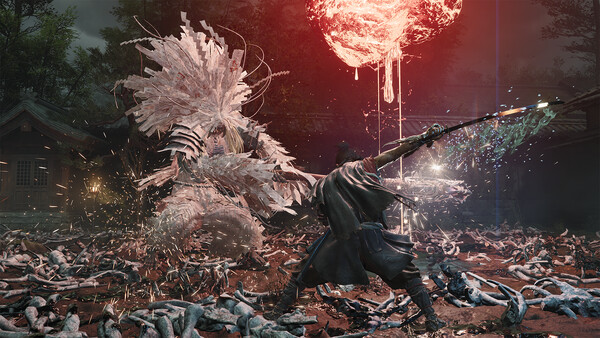
The Oni Gauntlet is the cornerstone of your progression. Obtained early in the story after Musashi's initial defeat, it serves as both a narrative anchor and a gameplay engine. Its most important function is soul absorption: when you slay Genma, they release colored souls that the gauntlet draws in automatically. These souls serve distinct purposes — powering your abilities, restoring your health, or fueling upgrades — though the exact mapping of each soul color may be refined at launch, so pay close attention to the in-game tutorials as you encounter each type.
Understanding soul absorption is critical because it directly ties your combat performance to your progression. Aggressive, skillful play yields more souls per encounter, especially when using advanced techniques like the Issen counter. The gauntlet also houses the Oni Lady, a mysterious figure who guides Musashi and plays a key role in the unfolding story. Treat the gauntlet not as a passive collectible but as an active partner that rewards you for engaging with the combat system at a deeper level.
Combat Fundamentals: Stances, Commitment, and the Issen Counter
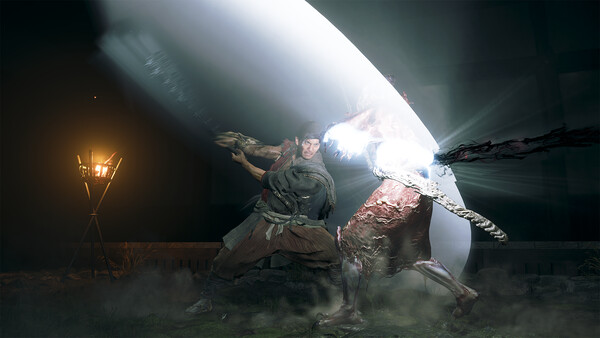
Musashi's katana operates in two distinct stances, each suited to different combat situations. While the game's tutorial introduces your combat tools one at a time in isolated sections rather than overwhelming you all at once, it is important to understand early that every swing you throw is a commitment — Musashi has no traditional stamina meter, but once an attack animation begins, you are locked in until it finishes. This means button-mashing will get you killed. Deliberate, well-timed strikes are the foundation of survival.
The Issen counter is one of the most rewarding mechanics in the game. Landing a properly timed Issen kills most standard Genma outright and releases bonus souls compared to a normal kill. Roughly ten Issen variations exist depending on the angle from which an enemy attack arrives, giving the system real depth. Crucially, the risk of attempting an Issen is low: mistiming it results in roughly the same outcome as a missed block, so you should practice it against weaker enemies from the start rather than saving it for boss encounters. The related Break Issen triggers when an enemy's stamina gauge is depleted and does not require frame-perfect timing, making it a more accessible entry point into the counter system.
The Four-Tier Parry System and Oni Vision
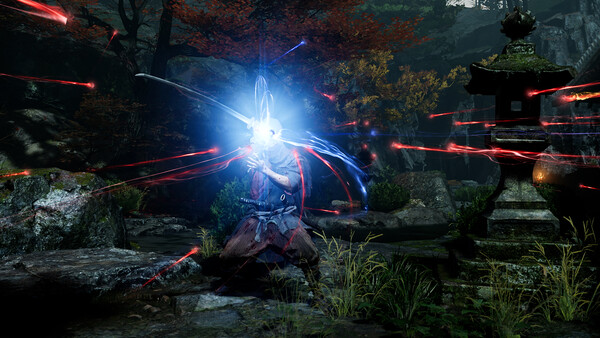
Defense in Onimusha: Way of the Sword revolves around a four-tier parry system that goes well beyond simple blocking. The tiers reward increasingly precise timing with increasingly powerful defensive responses, from a basic guard all the way up to a perfect deflection that opens enemies to devastating counterattacks. Beginners should focus first on getting comfortable with the basic guard and then gradually tighten their timing as they learn each enemy's attack patterns. The game's handcrafted encounter design means you will face the same enemy types repeatedly, giving you ample opportunity to internalize their rhythms.
Oni Vision is another tool granted by the gauntlet that allows Musashi to perceive hidden elements in the environment — secrets, traps, and things the naked eye cannot detect. Activating it regularly as you explore Kyoto's districts will reveal paths and items you would otherwise miss entirely. Between the parry system's defensive depth and Oni Vision's exploration utility, the gauntlet provides the answer to nearly every obstacle the game throws at you.
Early-Game Survival Tips
Before your first session, choose your difficulty preset carefully. The game offers Story and Action presets that sit on top of granular difficulty sliders, so you can fine-tune the experience to your comfort level. Story mode eases combat intensity for players primarily interested in the narrative, while Action mode delivers the full challenge. Neither choice locks you out of content, so pick whichever suits your playstyle and adjust the sliders as you improve.
In your opening hours, prioritize learning enemy patterns over dealing damage. The deliberate, commitment-based combat means that understanding when to strike is far more valuable than knowing the flashiest combo. Practice Issen counters on the weakest Genma you encounter — the downside of a miss is minimal, and the bonus souls from a successful one accelerate your early progression significantly. Keep Oni Vision active when exploring new areas, absorb every soul you can, and remember that this is a game that rewards patience and observation over aggression. Musashi's rival Sasaki Ganryu, who wields his own Oni Gauntlet, will appear to challenge you at key points — treat these encounters as skill checks and learn from each defeat.